Introduction
Your volunteer experience abroad was transformative—but can it transform your career? Absolutely. The skills, perspectives, and connections you gained through international service are exactly what employers across dozens of industries are looking for.
The challenge is translating your experience into language that resonates with hiring managers, graduate school admissions committees, and professional networks. This guide shows you how.
The Skills You Gained (That Employers Want)
Hard Skills
Depending on your program, you may have developed:
Teaching and training: Curriculum development, public speaking, classroom managementProject management: Planning, execution, and adaptation under constraintsData collection and analysis: Research methods, survey design, field dataTechnical skills: Construction, healthcare procedures, conservation techniquesLanguage proficiency: Working-level fluency in another languageDigital communication: Managing projects across time zones and platformsSoft Skills
These are often more valuable than hard skills:
Cross-cultural communication: Working effectively across language and cultural barriersAdaptability: Thriving in unpredictable, resource-limited environmentsProblem-solving: Finding creative solutions without standard tools or processesEmotional intelligence: Navigating complex social dynamics with sensitivityResilience: Maintaining performance under stress, discomfort, and uncertaintyInitiative: Taking ownership without clear direction or supervision"Employers tell us that candidates with international volunteer experience stand out because they've proven they can handle ambiguity, adapt quickly, and work with anyone. Those are the hardest skills to teach." — Dr. Sarah Mitchell
Updating Your Résumé
Where to Place Volunteer Experience
Recent graduates: Feature prominently in main experience sectionCareer changers: Place in a separate "International Experience" sectionExperienced professionals: Include in relevant experience with focus on skills gainedApplying to international organizations: Lead with this experienceHow to Write It
Bad example:
"Volunteered at a school in Kenya for 3 months"
Good example:
"Volunteer English Teacher — Bright Future Academy, Kisumu, Kenya (June-August 2025)
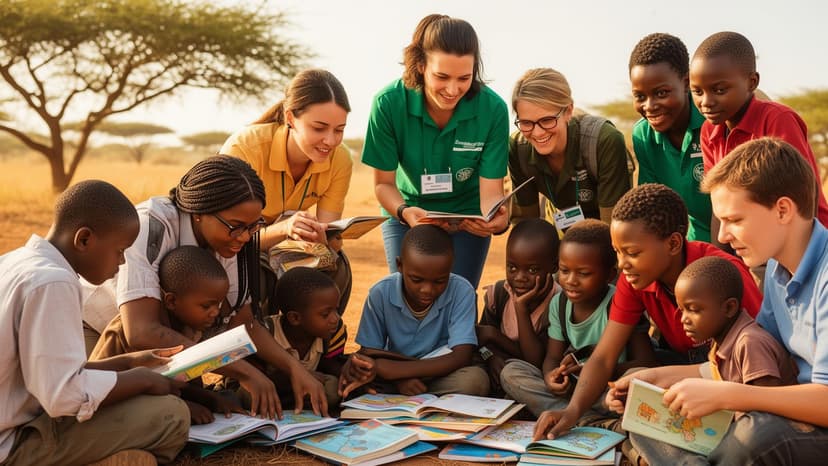
Designed and delivered daily English curriculum for 45 students aged 8-12, improving test scores by 15%Created reusable teaching materials adopted by 3 local teachers after departureCoordinated with school administration to implement after-school reading program serving 30 additional studentsManaged cross-cultural communication in a multilingual environment (English, Swahili, Dholuo)"Key Principles
Use action verbs: Designed, managed, coordinated, implemented, trainedQuantify impact: Numbers of students, percentage improvements, hours contributedFocus on outcomes: What changed because of your work?Highlight transferable skills: Connect volunteer activities to professional competenciesBe specific: Vague descriptions don't impressNetworking from Your Experience
Leveraging Your Volunteer Network
Your volunteer connections are a professional network:
Fellow volunteers: May work in industries you're interested inProgram staff: Often connected to international development organizationsHost community members: Can provide references and ongoing partnershipsAlumni networks: Many programs have active alumni communitiesLinkedIn Strategies
Update your profile with volunteer experience immediately upon returnWrite a LinkedIn article about your experience (these get high engagement)Connect with everyone from your programJoin returned volunteer groups and international development communitiesEndorse and recommend fellow volunteers (they'll often reciprocate)Use your experience as a conversation starter:
Reach out to professionals in fields you're interested inLead with your volunteer story—it's memorable and demonstrates initiativeAsk about how international experience is valued in their organizationRequest introductions to others in the fieldCareer Paths Opened by Volunteering
International Development
The most direct path:
NGO program managementUSAID, DFID, or UN agency positionsConsulting for international organizationsGrant writing and fundraisingEducation
If you taught abroad:
TEFL/TESOL careers worldwideInternational school teachingEducation policy and researchEducational technologyHealthcare
If you worked in health programs:
Global health careers (WHO, MSF, Partners in Health)Public health researchHealth policy and advocacyMedical missions coordinationEnvironmental/Conservation
If you did conservation work:
Conservation biology careersEnvironmental policyEco-tourism managementSustainability consultingBusiness and Consulting
Perhaps surprisingly, corporate employers value volunteer experience:
International business developmentCross-cultural consultingCorporate social responsibility (CSR) managementSocial enterprise and impact investingGraduate School Applications
How Volunteer Experience Strengthens Applications
Admissions committees look for:
Demonstrated commitment: Not just interest in a field, but actionUnique perspectives: Experience that differentiates you from other applicantsMaturity and self-awareness: Reflection on challenges and growthClear motivation: A compelling "why" for pursuing further educationWriting About It
In personal statements and application essays:
Tell a specific story, not a general summaryShow what you learned, not just what you didConnect the experience to your academic and career goalsBe honest about challenges and failures—admissions committees appreciate authenticityDemonstrate how the experience changed your thinkingPrograms That Value Volunteer Experience
Public health (MPH programs actively seek it)International affairs and diplomacySocial work and community developmentEnvironmental science and policyEducation leadershipInterviewing with Volunteer Experience
The STAR Method
Use the Situation-Task-Action-Result framework:
Situation: "While teaching in a rural Kenyan school with limited resources..."Task: "I needed to create engaging English lessons for 45 students with no textbooks..."Action: "I developed a curriculum using locally available materials and interactive games..."Result: "Student test scores improved 15%, and three local teachers adopted my methods after I left."Common Interview Questions
Prepare answers for:
"Tell me about a time you had to adapt to an unfamiliar situation""Describe a challenge you overcame with limited resources""How do you handle working with people from different backgrounds?""Give an example of when you showed initiative""What's the most important thing you've learned outside of work/school?"Explore career-building volunteer programs at volunteertotheworld.com →
Conclusion
Your volunteer experience is a career asset—but only if you articulate it effectively. Frame your experience in terms of skills gained, impact created, and lessons learned. Connect it to the specific role or program you're pursuing. And don't be modest—what you accomplished abroad in challenging conditions is remarkable.
The world needs professionals who understand different cultures, can solve problems with limited resources, and are driven by purpose as well as profit. Your volunteer experience proves you're one of them.
For more on post-volunteer life, read [Post-Trip Re-Entry](/blog/post-trip-reentry-processing) and [University Students and Volunteering](/blog/university-students-volunteering-balance).
 Dr. Sarah Mitchell