 Maria Rodriguez
Arriving in the Sacred Valley
I arrived in Peru with a degree in international development, a head full of theories, and a heart full of good intentions. I thought I knew what sustainable development looked like—until the Andes taught me otherwise.
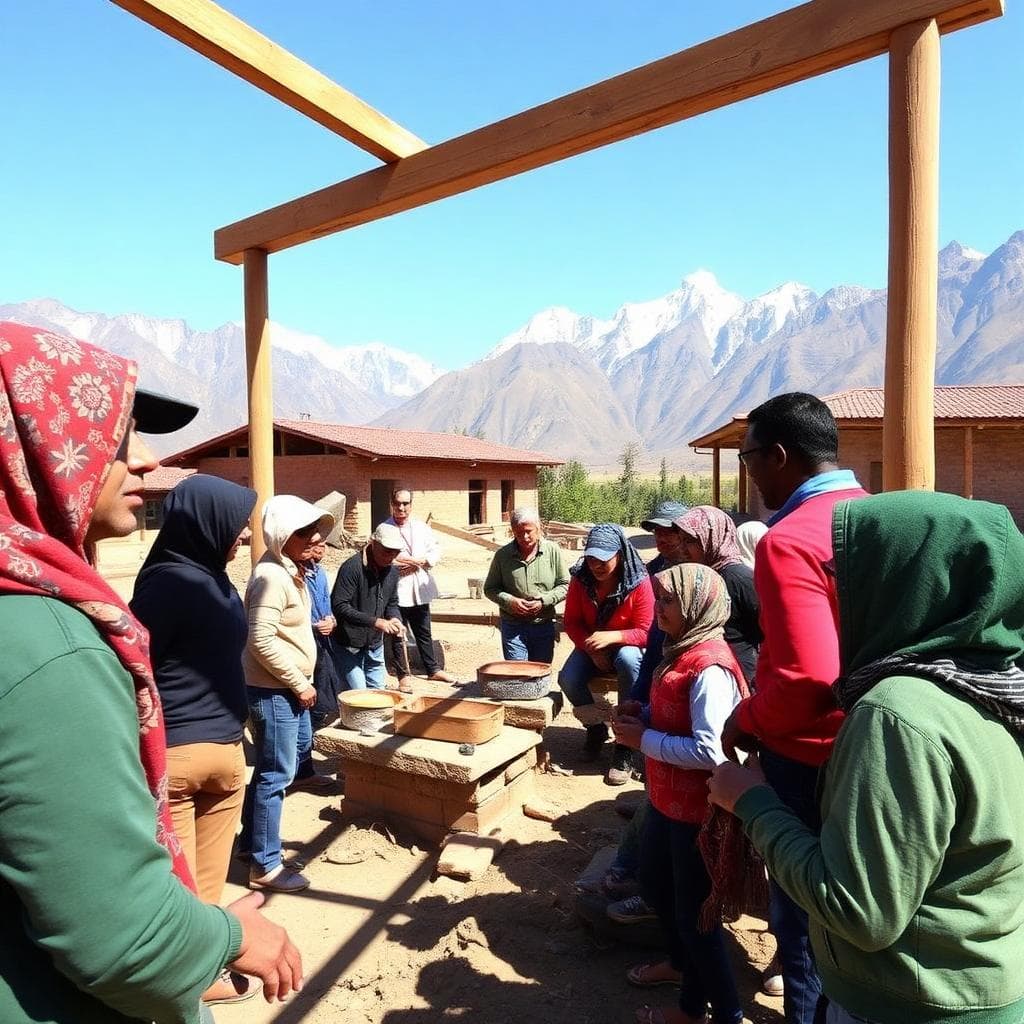
My placement was in a small community three hours from Cusco, nestled between mountains that had watched over Quechua-speaking farmers for centuries. I was there to help with a water project: installing pipes, building filtration systems, making life "better."
What I didn't expect was how much I would learn about what "better" really means.
The Lesson of the Terraces
On my first day, I noticed the ancient agricultural terraces carved into the hillsides—engineering marvels built by the Inca centuries ago, still in use today. I asked the community leader, Don Manuel, about them.
"These terraces," he said, gesturing to the green steps climbing toward the sky, "they give us different climates at different levels. We grow potatoes here, quinoa there, corn above. If one crop fails, another survives."
I realized I was looking at the original sustainable system. The Inca had solved problems of food security, erosion, and irrigation long before "sustainable development" became a buzzword.
"I came to teach sustainable development. Instead, I learned that sustainability isn't a Western import—it's often a return to what communities already knew."
Recommended Reading
When My Plan Failed
Three weeks into the project, our pipe system failed. The pressure was wrong; we'd made calculations based on textbook formulas that didn't account for the mountain's reality. I was embarrassed, frustrated, ready to give up.
Don Manuel's wife, Doña Rosa, laughed kindly. "The mountain has its own rules," she said. "You must ask it, not tell it."
What happened next transformed my understanding. The community gathered—not to criticize, but to problem-solve. Elders who had built irrigation channels with their fathers shared knowledge. Younger members who had studied engineering in Cusco offered calculations. Children ran between groups, translating between Spanish and Quechua.
By the end of the week, we had a solution that combined traditional water management with modern materials. It worked. And it was better than anything I could have designed alone.
The Real Development Work
As weeks passed, I began to understand that the water project was almost secondary. The real development was happening in the evening conversations, the shared meals, the exchanges of perspective.
I taught English and basic computer skills. But I learned:
The Question That Changed Everything
One evening, a young woman named Esperanza asked me a question I still think about years later.
"When you develop your communities," she said, "do you develop toward something, or away from something?"
I didn't understand at first. She explained: "Sometimes development feels like running away from who we are. Toward what? More things? More speed? We want our children to have choices—but not to forget that these mountains chose us."
I had no answer. But the question redefined how I see development work. Whose vision of "better" are we working toward? Who decides?
What Sustainable Really Means
By the end of my three months, the water system was working. Homes that had relied on children carrying water from distant streams now had taps. That mattered.
But what mattered more was how we got there:
Coming Home Different
Returning to my life, I struggled with reverse culture shock. Everything seemed wasteful, rushed, disconnected. I understood, for the first time, why some volunteers never really come back.
But Peru gave me more than discontent. It gave me a new framework:
Ask before assuming. Communities know their challenges better than outside experts.
Listen longer. The best solutions often emerge from the margins of conversations, not the center.
Measure differently. Speed isn't progress. Growth isn't development. Sometimes sustainability means doing less, not more.
Stay humble. I came to help, but I received far more than I gave.
Find community development programs at volunteertotheworld.com →
The Continuing Connection
I still talk to Esperanza. She's now training as a nurse, studying in Cusco but planning to return. The water system still works; Don Manuel sends photos sometimes of the children who no longer carry water jugs.
When people ask if my volunteer trip "made a difference," I say yes—but not in the way they expect. It made a difference to me. It changed how I see development, sustainability, and my own role in a world that's always more complex than theories suggest.
The mountains taught me that the best development comes not from outside, but from within—when communities are supported, not directed; listened to, not lectured at.
And sometimes, the most sustainable solution was there all along, carved into terraced hillsides by ancestors who understood something we're still learning.
Inspired to volunteer in Peru? Learn more about [sustainable volunteering](/blog/ethical-programs-guide) and [explore Peru programs](/destinations/peru).
Ready to Start Your Volunteer Journey?
Explore ethical programs in Kenya, Nepal, Thailand, and more.
View Programs on VolunteerToTheWorld.com
Program Coordinator
Experienced travel coordinator helping volunteers find meaningful placements since 2018.
You May Also Like
Volunteering in Ecuador
How to Choose Ethical Volunteer Programs

Volunteering Abroad After Retirement: A Guide for 60+ Travelers
Volunteering in Ghana: Education and Community Development in West Africa

Volunteering in Mozambique: Coastal Conservation and Community Development

Permaculture Volunteering Programs: Design a Sustainable Future
Related Programs on VolunteerToTheWorld.com
Ready to take the next step? Explore verified programs related to this article.