 James Okonkwo
Introduction
At 38, Michael Chen had everything that was supposed to make him happy: a six-figure salary, a corner office, and the respect of his peers in Singapore's competitive finance industry. He also had insomnia, chronic anxiety, and a growing sense that something essential was missing from his life.
Six months later, he was tracking lion movements in South Africa's savannah, covered in dust, earning nothing, and feeling more alive than he had in years.
This is his story.
The Breaking Point
Recommended Reading
When Success Felt Empty
"I remember sitting in my office after closing a major deal," Michael recalls. "Everyone was congratulating me. The bonus would be substantial. And I felt absolutely nothing."
It wasn't sudden—the disillusionment had been building for years:
The Wake-Up Call
The heart palpitations started in his mid-thirties. "I was in a meeting, pitching to clients, and suddenly I couldn't breathe. I thought I was dying."
The cardiologist found nothing wrong physically. "It's stress," she said simply. "Your body is telling you something your mind isn't ready to hear."
The Documentary That Changed Everything
On medical leave, Michael watched a documentary about rhino poaching in South Africa. "Something clicked. Here were people risking their lives to protect animals, and I was risking mine to move numbers on a spreadsheet."
He began researching wildlife conservation volunteering that evening.
The Decision
Overcoming Fear
The decision wasn't easy:
Planning the Transition
Michael spent three months preparing:
The Conservation Experience
Week One: Culture Shock
"Nothing prepares you for the reality of conservation work. I went from a temperature-controlled office to 5 AM wake-ups in the bush."
The adjustment was brutal:
The Turning Point
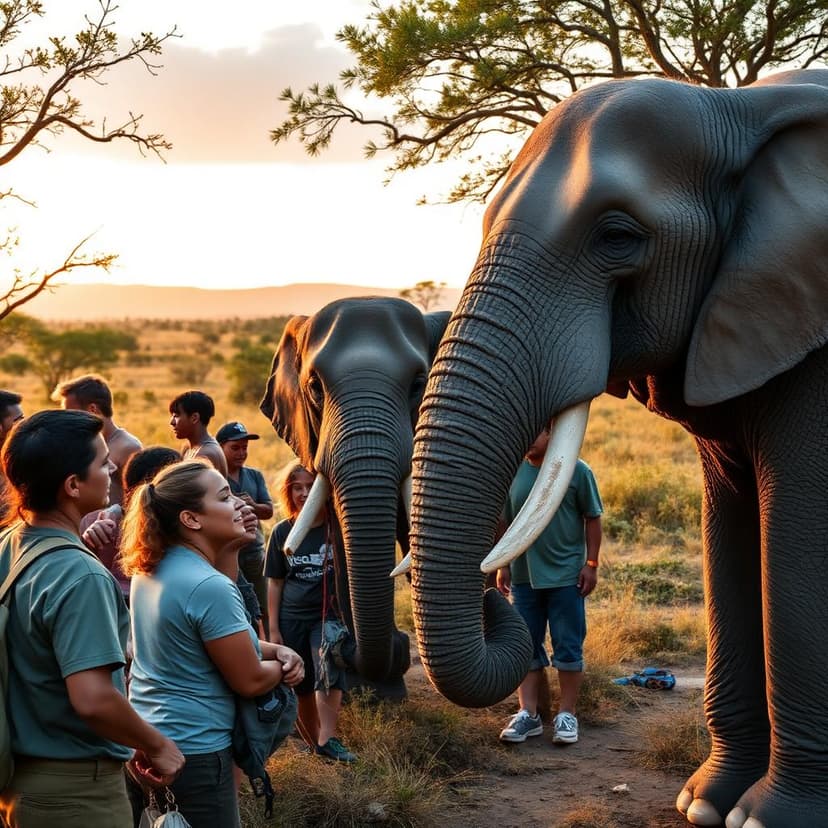
"It happened during my second week. We were doing a dawn game drive, and I saw a herd of elephants with a newborn calf. The mother was teaching it to use its trunk to drink."
"I sat there in the Land Rover, tears streaming down my face, and I thought: this is what being alive feels like."
Daily Life on the Reserve
A typical day:
Skills Transfer
Michael's corporate background proved surprisingly useful:
"I thought my corporate skills would be useless. Instead, they gave me a unique way to contribute." — Michael Chen
The Transformation
Physical Changes
"I went from managing multimillion-dollar portfolios to learning to identify animal tracks in the sand. My hands got calloused. I slept deeply for the first time in years."
Finding Purpose
The work was unglamorous but meaningful:
"There's something about being part of something bigger—something that will outlast you—that finance could never provide."
Explore conservation programs at volunteertotheworld.com →
Lessons Learned
About Success
"I used to measure success in promotions and bonuses. Now I measure it in moments of genuine presence—watching a sunrise over the bush, seeing a mother rhino with her calf, feeling tired from physical work that matters."
About Connection
"In the corporate world, relationships were transactional. In the bush, with other volunteers and the local staff, connections were real. We depended on each other. We shared meals and stories and struggles."
About Capability
"I discovered I was capable of things I never imagined—navigating off-road in the dark, staying calm when encountering dangerous animals, living with uncertainty and minimal comfort."
The Transition Back
What Changed
After four months in South Africa, Michael returned home—but not to his old life:
"I'm not naive. I still work, still have stress, still have bills. But the baseline has shifted. I know what matters now."
Staying Connected
He maintains ties to conservation:
Advice for Others
Before You Leap
"Do your research. Understand what you're getting into. Conservation work isn't a vacation—it's real work with real challenges."
During the Transition
"Be patient with yourself. The first few weeks will be hard. You'll question your decision. Keep going."
The Real Question
"Ask yourself: what do you want your life to mean? If the answer isn't what you're currently doing, you owe it to yourself to explore alternatives."
Conclusion
Michael's story isn't about abandoning responsibility—it's about redefining what matters. His corporate skills now serve a different purpose: fundraising, strategy, and operations for organizations that protect wildlife.
"I didn't throw away my career. I transformed it. I traded climbing someone else's ladder for building my own path."
Not everyone can or should leave their career for conservation. But everyone can examine whether their current path aligns with their deepest values—and make adjustments, large or small.
Ready to explore your own transformation? Find conservation programs at volunteertotheworld.com.
Ready to Start Your Volunteer Journey?
Explore ethical programs in Kenya, Nepal, Thailand, and more.
View Programs on VolunteerToTheWorld.com
Head of Partnerships
Former teacher with 10+ years coordinating education programs across East Africa.
You May Also Like
Wildlife Conservation in South Africa
Skills-Based Volunteering for Professionals
From Volunteer to Program Coordinator: My Journey Building Schools in Cambodia
A Family's Volunteer Adventure: Traveling with Kids in Nepal
How Volunteering in Peru Changed My Perspective on Sustainable Development
Reverse Culture Shock: Why Coming Home Feels Harder Than Leaving
Related Programs on VolunteerToTheWorld.com
Ready to take the next step? Explore verified programs related to this article.